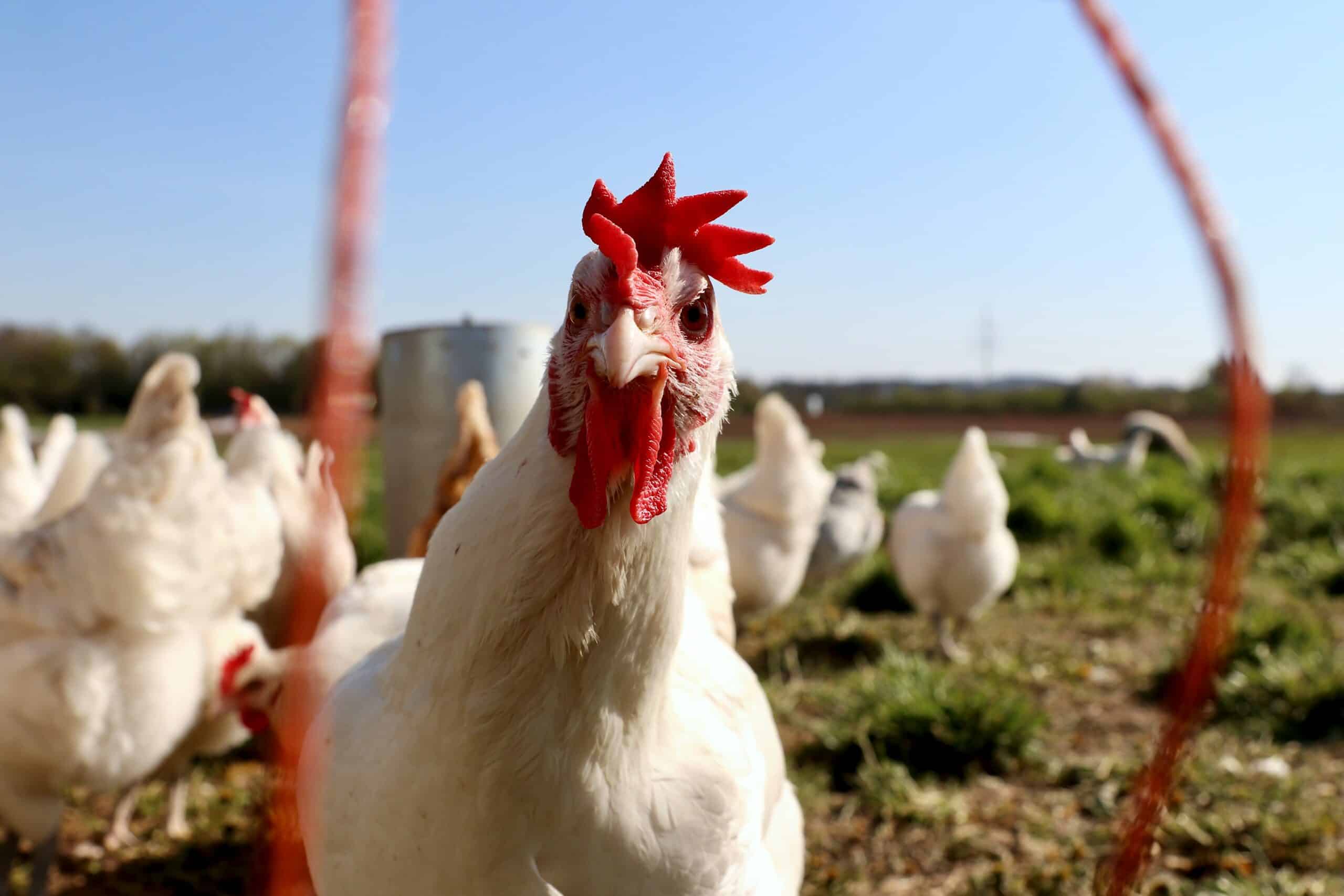
If you’re starting a backyard flock around Charlotte, the two easiest birds to be happy with are the Rhode Island Red and the Black Sex Link — heat-tolerant brown-egg layers that don’t mind a beginner. Add a calm Wyandotte and a colorful Easter Egger and you’ve got a flock that handles our summers and fills an egg basket.
The longer answer is that the “right” breed depends on what you want: the most eggs, the prettiest basket, the friendliest birds for kids, or the toughest birds for a humid Carolina July. This guide walks through the eight breeds we bring in for Chick Days at 1900 Moore Road in Matthews, what each one is actually good at, and how to put together a mix that fits your yard.
What to weigh before you pick a breed
Four things matter most around here, roughly in this order:
- Heat and humidity. This is the one most online breed guides skip, because most of them are written for cold climates. Our problem isn’t a hard winter freeze — a feathered hen handles a piedmont winter fine. It’s the humid 96°F afternoon in July. Birds with a single comb and lighter feathering shed heat better, since a chicken can’t sweat and dumps heat through its comb, wattles, and legs. The heavily feathered breeds are built for cold and want shade and airflow once summer hits.
- Eggs — how many, and what color. A good backyard layer gives you somewhere around 200 to 280 eggs a year. If you want a colorful basket, mix in a blue-, green-, or dark-brown-egg bird, since most of the steady brown layers all give you the same shade.
- Temperament. With kids, or on a first flock, you want calm, friendly birds that tolerate handling and don’t panic in a run. A flighty bird lays fine but is no fun in a backyard.
- Space. Most of these do fine in a normal run with the room a coop needs (4 square feet a bird inside, 8 to 10 in the run). A couple are real foragers that are happiest with room to roam.
Laying age is about the same across all of them: pullets start somewhere between 16 and 24 weeks, so a chick you bring home in March will have you in eggs by mid-to-late summer.
The eight breeds we bring in for Chick Days
These are the birds we stock, drawn from the waves we run each spring. We didn’t pick them off a chart — they’re the breeds that earn their keep in our climate and our customers’ backyards.
Rhode Island Red — the workhorse
If you only keep one breed, keep this one. A Rhode Island Red lays around 250 to 300 large brown eggs a year, close to an egg a day, and it’s one of the few breeds the hatcheries specifically flag as heat-hardy. The single comb helps it shed our summer heat, and it’s just as content through a mild winter. Hens are hardy, active, and easygoing — a forgiving bird for a first-timer — and they’re not prone to going broody, so they keep right on laying. Dual-purpose and solid at about 6½ pounds. This is our Wave 1 bird most springs, and for good reason.
Best for: your first flock and your most reliable layer.
Black Sex Link — the easy egg machine
The Black Sex Link is a hybrid, not a true breed: it’s a Rhode Island Red rooster crossed over a Barred Rock hen. That cross is what lets the chicks be sexed by their down color the day they hatch, so you know you’re taking home pullets. It also gives the bird the toughness of both parents — these are among the hardiest birds going in both heat and cold, with a single comb and real staying power. Expect around 250 large brown eggs a year, often more, from a calm, friendly hen that’s about as beginner-proof as a chicken gets and rarely goes broody. The one catch is that hybrids don’t breed true, so you can’t hatch more of the same from them — but for eggs on the counter, that doesn’t matter a bit.
Best for: the most eggs with the least fuss.
Columbian Wyandotte — the calm one
A handsome, unflappable dual-purpose bird, white with a black-laced neck. Wyandottes lay four or five brown eggs a week, around 200 a year, starting near 16 to 20 weeks. The rose comb sits low and flat, so there’s almost nothing there to frostbite, which makes them very cold-hardy. The trade-off is heavy feathering: in our humid July heat a Wyandotte wants real shade and airflow more than the single-combed birds do. Give it that and it does just fine here. Temperament is the selling point — calm, steady, tolerant of a run, and one of the gentlest birds in the lineup, which makes it a favorite around kids.
Best for: a docile, good-looking layer — just mind the summer shade.
Easter Egger — the colorful one
This is the bird that puts blue and green eggs in your basket. The Easter Egger isn’t a recognized breed but a type — a mixed bird carrying the blue-egg gene from its Ameraucana ancestry. Every one looks a little different, which is half the fun, and each hen lays one consistent color her whole life, whether that’s blue, green, or sometimes a pinkish olive. Figure around 200 to 250 large eggs a year. Most have a small pea comb that’s frost-resistant, and they’re a generally hardy, adaptable bird that takes our heat and our mild winters in stride. Friendly, curious, and a reliable favorite with kids; rarely broody. A smaller bird at four to five pounds.
Best for: a fun, kid-pleasing hen and a basket of colored eggs.
Welsummer — the pretty egg
Worth keeping for the eggs alone: deep terracotta brown, often flecked with darker speckles, easily the prettiest egg in the carton. A Welsummer lays around four a week, roughly 200 a year — fewer than the production layers, but you’ll forgive it the first time you see the basket. The single comb sheds heat well, so it handles a Carolina summer with shade and cool water. It’s an active, alert bird and a strong forager that’s happiest with room to range; calm enough, but more of a busybody than a lap chicken. Hens run about 5½ to 6 pounds.
Best for: foragers, and anyone who wants a standout egg.
Buckeye — the heritage forager
A deep-mahogany, all-American heritage breed, and one the Livestock Conservancy keeps a watchful eye on. Buckeyes lay around 200 medium-to-large brown eggs a year. The pea comb makes them very cold-hardy and frost-resistant, and they take our heat well too — provided they have room to move, because these are active birds that don’t love tight confinement. (They were actually bred for cold Ohio winters, but that hardiness cuts both ways.) Active yet genuinely gentle and friendly, often curious about people, and famous for hunting mice around the coop. A good-sized dual-purpose bird — roosters near 9 pounds, hens around 6½.
Best for: a hardy, self-reliant heritage bird for a flock with space to range.
Dark Brahma & Buff Brahma — the gentle giants
The big, feather-footed birds everyone wants to hold. Brahmas lay up to about 200 large, medium-brown eggs a year, and here’s their trick: they lay well through winter, when most of your other hens have quit cold. They’re slow to mature, so they start a little later than the rest. A pea comb and dense, fluffy feathering make them some of the most cold-hardy chickens there are — but that same heavy coat is also their weak spot, because heat is hard on them. Of everything we carry, the Brahmas are the birds that most need deep shade, good airflow, and cool water through a Charlotte summer. Give them that and they’re fine. In return you get the most docile bird in the yard: calm, tolerant of confinement, wonderful with children, and prone to going broody and raising chicks if you let them. Big birds, 8 to 12 pounds. Dark Brahma usually comes in our spring waves; Buff Brahma joins a later one.
Best for: a friendly showpiece, winter eggs, and families with kids.
How to pick your mix
You don’t have to overthink this. A few rules of thumb cover most backyards:
- If you just want eggs: Rhode Island Reds and Black Sex Links. Both are heat-tolerant brown-egg machines, and four of them will bury most families in eggs.
- If you want a pretty egg basket: add an Easter Egger for blue or green and a Welsummer for dark speckled brown. Next to the standard brown layers, you’ll get a different-colored basket every day — and you can tell your hens apart at a glance.
- If you’ve got kids or you’re brand new: lean calm. Black Sex Links, Wyandottes, Buckeyes, Easter Eggers, and the Brahmas are all easygoing birds that put up with handling.
- If summer heat is your main worry: Rhode Island Reds, Black Sex Links, Buckeyes, Welsummers, and Easter Eggers take our humidity best. The Wyandotte and especially the Brahmas will do fine too — they just need extra shade and airflow once July hits.
A mixed flock is the fun way to go, and it’s what most of our customers land on: a couple of good layers, a colored-egg bird or two, and a gentle giant for the kids. Because of our four-chick minimum, a starter four like two Rhode Island Reds, an Easter Egger, and a Black Sex Link gives you a steady run of brown eggs, a pop of blue or green, and three temperaments that all get along.
The local angle: which of these you can get, and when
Here’s the part the big hatcheries and the national chains can’t tell you — which of these birds will be in a tank in Matthews, and when.
Every spring we run Chick Days at 1900 Moore Road, bringing in waves of specific breeds a few weeks apart. The lineup shifts year to year, but it’s drawn from exactly these eight: Rhode Island Reds usually lead off, with Wyandottes, Brahmas, Buckeyes, Easter Eggers, Welsummers, and Black Sex Links filling out the later waves. They’re sold first come, first served, with a four-chick minimum and no pre-orders — so once a wave sells out, those birds are gone until the next season.
That’s the real reason to settle on your breeds ahead of time. When the Easter Eggers land and you’ve already decided you want two, you can come grab them instead of standing over the tank trying to choose. The season’s breed list and arrival dates go up on our Chick Days page each year.
Practical tips from Neighborhood Feed.
Pets, poultry, and backyard wildlife — useful, plain-spoken advice from the folks at 1900 Moore Road in Matthews. One email when we’ve got something worth your time. No spam.
Unsubscribe any time.
Picking out your flock? We carry the chicks each spring, plus everything they need to thrive in our climate — starter feed, brooder plates, feeders, waterers, and coop hardware — at 1900 Moore Road in Matthews, and we’ll deliver locally if hauling feed bags isn’t your thing. Not sure which breeds fit your yard and your egg goals? Come talk to us. We’ve been doing this a long time, and we’d rather get you set up right.
Frequently asked questions
What’s the best chicken breed for a beginner in North Carolina?
Rhode Island Reds and Black Sex Links are the easiest birds to start with here. Both are calm, hardy, heat-tolerant, and lay a brown egg nearly every day. If you want an extra-gentle bird for kids, a Wyandotte or a Brahma is a calm addition to the flock.
Which backyard chickens handle the heat best?
Single-combed, lighter-feathered breeds shed heat best in our humidity — Rhode Island Reds and Black Sex Links lead the way, with Welsummers, Easter Eggers, and the heritage Buckeye close behind. The heavily feathered Wyandottes and Brahmas do fine too, but they need extra shade and good airflow once July arrives.
Which breeds lay colored or blue eggs?
Easter Eggers lay blue or green eggs, and Welsummers lay a deep, speckled dark-brown egg. Mix either one in with brown layers like Rhode Island Reds and you’ll get a different-colored basket on the counter.
How many chickens should I start with?
Four to six hens suits most families, and our Chick Days birds come with a four-chick minimum anyway. A healthy hen lays around 250 eggs in her first year, so even four birds will keep most households in eggs.
Do I need a rooster to get eggs?
No. Hens lay with or without a rooster around. You only need a rooster if you want fertile eggs to hatch into chicks — and several towns around Charlotte ban roosters anyway.
When can I get these breeds in the Charlotte area?
We bring them in each spring during Chick Days at 1900 Moore Road in Matthews, in waves a few weeks apart, sold first come, first served. The season’s lineup and dates go up on our Chick Days page.
Part of our guide to raising backyard chickens in the Charlotte area. Ready for birds? See what’s coming this season on our Chick Days page.