The birds at a Charlotte-area feeder are easy to learn once you know who to expect. A handful of regulars show up all year — cardinals, chickadees, titmice, finches, a woodpecker or two — and a second crew of “snowbirds” drops in for the winter. This guide walks through the birds you’ll actually see in the North Carolina piedmont, how to tell them apart, and what to put out to bring each one in.
We’ve been selling seed and feeders at 1900 Moore Road in Matthews for a long time, so most of this comes from what people around here actually see in their own yards. Get a couple of things right — the right seed, a clean feeder, a little cover nearby — and a bare backyard fills up fast.
Want it in one page? Get our free month-by-month backyard-bird feeder calendar for the Charlotte piedmont — who’s at your feeder, what to put out, and when the hummingbirds come and go. We’ll email it to you.
The backyard birds of the NC piedmont
Start by learning the year-round residents. These fifteen are the birds at a piedmont feeder in just about every season, and once you know them, the winter visitors are easy to spot as newcomers.
- Northern Cardinal. The one everyone knows, and the most common feeder bird around here. The male is all red with a black mask; the female is warm tan with red accents. They keep that red right through winter. Big seed-eater — sunflower and safflower are their favorites.
- Carolina Chickadee. Tiny, round, with a black cap and bib and white cheeks. Ours is the Carolina Chickadee, not the Black-capped — the Black-capped only lives on our highest mountain peaks and never makes it to the piedmont. Bold and curious; one of the first birds to find a new feeder.
- Tufted Titmouse. Soft gray with a pointed crest and big dark eyes. Travels with the chickadees and works a feeder the same way: grab one seed, fly off, crack it, come back.
- Carolina Wren. Small, rusty-brown, with a white eyebrow stripe and a tail it cocks straight up. Loud for its size. More of an insect bird, so it’s the one you’ll see at the suet rather than the sunflower.
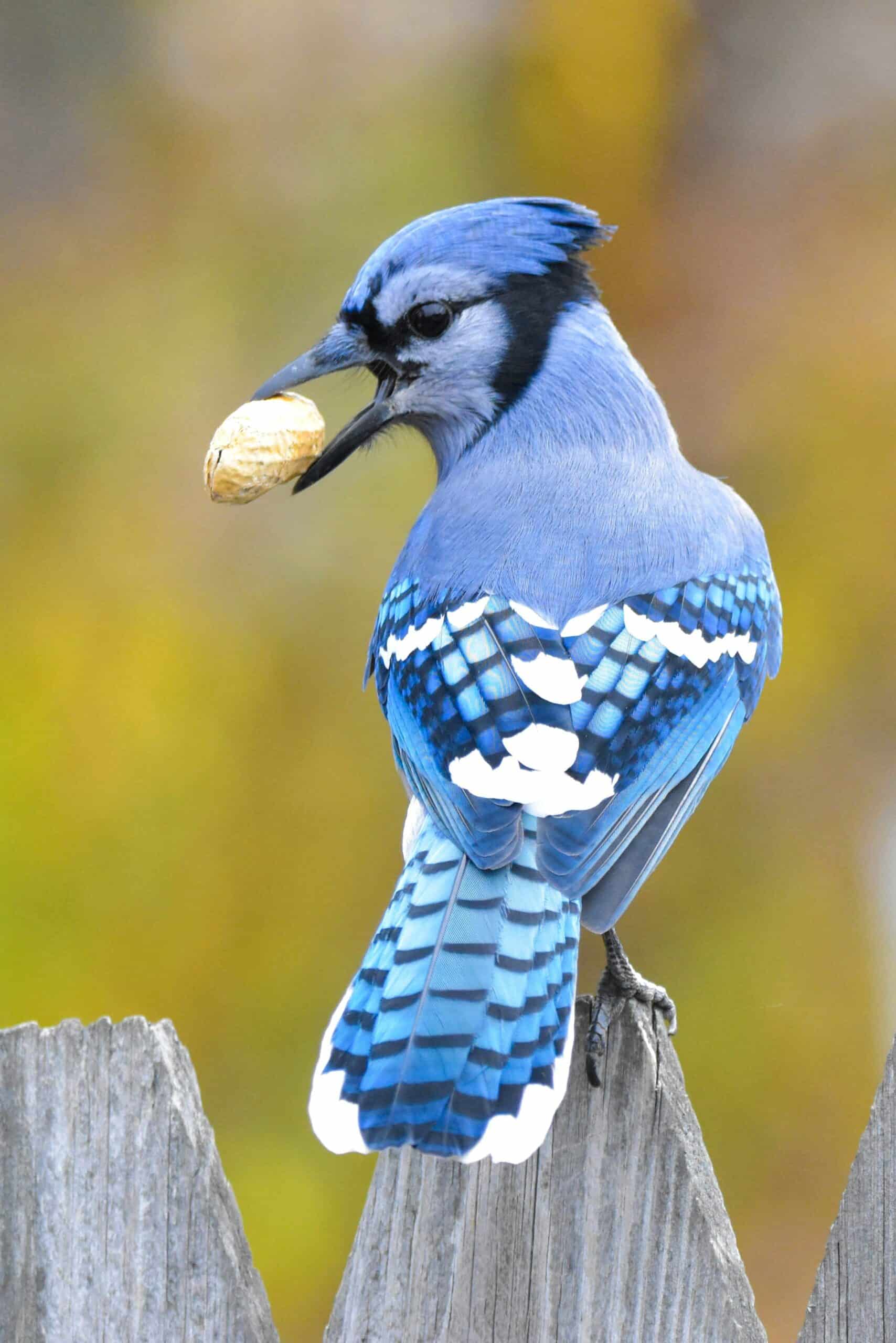
- Blue Jay. Big, loud, and unmistakable in blue, white, and black. Jays love peanuts and will haul off a surprising amount at once. Smart birds, and they’ll warn the whole yard when a hawk shows up.
- White-breasted Nuthatch. A little blue-gray bird that walks headfirst down the tree trunk, which no other backyard bird really does. Likes sunflower, suet, and peanuts.
- Brown-headed Nuthatch. Smaller, with a brown cap, and a call like a squeaky dog toy. A piedmont pine-woods specialty — if you’ve got pines nearby, watch for it.
- Mourning Dove. Plump, soft gray-brown, with a long pointed tail and a mournful coo. Feeds on the ground under the feeder; happiest with millet or cracked corn on a tray.
- Eastern Towhee. A big, handsome sparrow — black hood, rusty sides, white belly — that scratches around in the leaf litter below the feeder. Listen for “drink your tea.”
- American Goldfinch. Bright lemon-yellow in summer, a duller olive in winter (a lot of folks think they’ve left, but they’re here year-round). Crazy for nyjer (thistle) seed.
- House Finch. Streaky brown, the male washed with red on the head and chest. Common and social — they’ll mob a feeder. They’re also the bird to watch for eye disease (more on keeping feeders clean below).
- Downy Woodpecker. Our smallest woodpecker, black and white with a short bill (the male has a red spot on the back of the head). A suet regular.
- Red-bellied Woodpecker. Bigger, with a bright red cap and a black-and-white “zebra” back. The “red belly” is just a faint wash you’ll rarely see. Loves suet and peanuts.
- Eastern Bluebird. Brilliant blue above, rusty orange breast. They don’t eat seed, so the way to pull them in is mealworms — about the only feeder food they reliably take.
- Ruby-throated Hummingbird. Our only common hummingbird, and the one exception to “year-round” — they’re here spring through fall (more on timing below).
Then there are the winter visitors, here roughly November through March, that breed farther north or up in the mountains:
- Dark-eyed Junco — the classic “snowbird,” slate-gray with a white belly and pink bill, feeding on the ground in little flocks. When the juncos show up, winter’s here.
- White-throated Sparrow — a crisp sparrow with a white throat patch, yellow spot by the eye, and a whistled “oh-sweet-Canada” song.
- Song Sparrow and, in some years, Pine Siskin (a streaky little finch that turns up at nyjer feeders in irruptive winters) round out the cold-weather crew.
Who’s here when
It helps to think of the year in two halves. The fifteen residents above are with you all twelve months. Layered on top, the juncos, white-throats, and other northern sparrows arrive as the weather cools — figure November through March — and head back north in spring. The hummingbirds run the opposite schedule, here only from spring into fall. So a feeder in January looks different from a feeder in July, and that’s exactly as it should be.
What to feed to bring each bird in
If you buy one thing, buy black-oil sunflower seed. It’s the single best all-around feed there is — thin shell, high fat — and nearly every bird above eats it: cardinals, chickadees, titmice, finches, nuthatches. Everything else is about drawing in specific birds.
| What you put out | Who it brings in |
|---|---|
| Black-oil sunflower | The all-rounder — cardinals, chickadees, titmice, finches, nuthatches, and more |
| Sunflower hearts / chips | Same birds, no shell mess (it does spoil a little faster) |
| Safflower | Cardinals love it; a lot of folks use it because squirrels, grackles, and starlings tend to leave the bitter seed alone |
| Nyjer (thistle) | Goldfinches and winter siskins |
| White proso millet | Ground feeders — juncos, native sparrows, doves, towhees |
| Suet | Woodpeckers, nuthatches, chickadees, wrens |
| Peanuts | Blue jays, titmice, nuthatches, woodpeckers |
| Mealworms | The reliable way to draw bluebirds (also chickadees and wrens) |
| Cracked corn | Doves, sparrows, juncos (fair warning: it also draws blackbirds and squirrels) |
One thing worth knowing: the cheap “wild bird” mixes are mostly filler. The little round red seed in them is milo (sorghum), and our eastern birds just kick it to the ground to get at the good stuff. Same with red millet, wheat, and oats. Read the label — a good mix is mostly black-oil sunflower, maybe some sunflower hearts, white millet, and safflower, with little or no milo. We dig into all of this in our guide to the types of birdseed and which birds they attract, and we keep the good stuff in stock by the bag at the store.
Practical tips from Neighborhood Feed.
Pets, poultry, and backyard wildlife — useful, plain-spoken advice from the folks at 1900 Moore Road in Matthews. One email when we’ve got something worth your time. No spam.
Unsubscribe any time.
Feeders 101
The feeder you hang decides which birds can use it as much as the seed does. A quick rundown:
- Tube feeders suit the little clinging birds — finches, chickadees, titmice — and the short perches keep bigger grackles and jays from taking over.
- Hopper feeders feed just about everything and hold a lot of seed.
- Platform or tray feeders draw the widest variety, including the ground birds, but they’re the most exposed to squirrels and weather, so they need drainage and a daily once-over.
- Suet cages bring in the woodpeckers and nuthatches; a bottom-access cage helps keep starlings off.
- Nyjer (finch) feeders have tiny ports sized for thistle seed and goldfinches.
- Nectar feeders are for the hummingbirds (below).
A good starting setup for a piedmont yard is one sunflower feeder, one suet cage, and a tray for the ground birds — that covers most of the list above. We walk through the trade-offs in our guide to choosing the right bird feeder.
Hummingbirds in the piedmont
The ruby-throated hummingbird is worth its own paragraph, because it’s the one bird here on a clock. They arrive in our area in mid-to-late March into April, so it pays to have a feeder clean and out by the end of March to catch the first ones. They head south again through September and into early October.
A good rule is to leave your feeder up about two weeks past the last bird you see — it won’t keep anyone from migrating (that’s set by the shortening days, not your feeder), but it gives a late straggler a place to refuel. Around here that usually means taking it down in mid-to-late October.
The nectar itself is simple, and you should never buy the red stuff. Mix four parts water to one part plain white sugar, no dye and no honey. Keep it clean — every few days, and more often in summer heat, since nectar spoils fast in the sun.
Keeping them coming — and safe
Food is only half of it. A few more things keep birds in your yard and keep them healthy.
Water. A simple birdbath pulls in birds that won’t touch a feeder, and it matters most in a dry piedmont summer and a hard winter freeze. Keep it shallow and clean.
Keep the feeder clean. This is the one people skip, and it’s the one that actually matters for the birds’ health. Give feeders a wash every week or two — and right away if you see a sick bird — with a weak bleach solution (one part bleach to nine parts water), then rinse and dry before refilling. Rake up the old seed and droppings underneath, too. Watch in particular for house finch eye disease, where a bird turns up with red, crusty, swollen eyes; if you see it, take the feeders down and clean them before putting them back out. The same goes if you hear about a salmonella outbreak in the area — a week down and a good cleaning protects the whole flock.
Squirrels. The eternal battle. A baffle on the pole, a weight-activated feeder that closes under a squirrel, and switching to safflower all help.
Bears. This one surprises people, so it’s worth being straight about. Black bears are uncommon in the Charlotte area — the piedmont sees far fewer than the mountains, and the ones that pass through are usually young males just wandering through. But they do show up: the state wildlife commission filmed a bear helping itself to a bird feeder in Charlotte’s Highland Creek neighborhood in the spring of 2026. The North Carolina Wildlife Resources Commission’s standing advice statewide is to take your bird feeders down when bears are active, roughly mid-March through mid-November. For most Matthews yards that’s not a daily worry, but the rule of thumb is simple: the moment a bear is reported in your neighborhood, bring the feeders in for a while. (Their wildlife helpline is 866-318-2401.)
Windows and hawks. Birds sometimes hit windows, usually when something spooks them off the feeder. You can cut down on strikes by putting the feeder either very close to the glass — under three feet, so a startled bird can’t build up speed — or well away from it, past thirty feet. And don’t be alarmed when a hawk starts working your feeder; a Cooper’s hawk treating your yard as a buffet is just nature doing its thing. Keep a shrub or evergreen within a few feet so the little birds have cover to dive into, and if the hawk really settles in, take the feeders down for a few days to send the songbirds elsewhere. Hawks are federally protected, so they’re never to be harmed.
There’s more on all of this — predators, placement, and predator-proof feeders — in our guide to keeping backyard birds safe.
Getting started
You don’t need much to start. A cheap pair of binoculars and a free phone app will take you a long way. Merlin Bird ID (from the Cornell Lab) will name a bird from a photo or even its song, and eBird lets you keep a yard list and see what others are spotting nearby. A regional field guide rounds it out.
The trick to identifying a new bird is to look past the color first. Note its size and shape (sparrow-sized? robin-sized? what’s the bill like?), then its behavior (clinging to a trunk, scratching on the ground, hovering?), then the field marks — wing bars, eye rings, streaks. Color is the last and least reliable clue, since light plays tricks and many birds molt. And if you want company, the Mecklenburg Audubon Society and the Carolina Bird Club run local walks worth tagging along on.
Frequently asked questions
What are the most common backyard birds in North Carolina?
In the piedmont, your year-round regulars are the Northern Cardinal, Carolina Chickadee, Tufted Titmouse, Carolina Wren, Mourning Dove, Blue Jay, American Goldfinch, House Finch, Downy and Red-bellied Woodpeckers, and the nuthatches. In winter, add ground-feeding Dark-eyed Juncos and White-throated Sparrows.
What birdseed attracts the most birds?
Black-oil sunflower seed, hands down — it draws the widest range of feeder birds. From there, add nyjer for goldfinches, suet for woodpeckers, and mealworms if you want bluebirds.
When do hummingbirds arrive in North Carolina?
Ruby-throated hummingbirds reach our area in mid-to-late March into April, so have a clean nectar feeder out by the end of March. They head south again from September into early October.
Should I take my bird feeders down because of bears?
Bears are uncommon in the Charlotte area, but they do pass through. The state wildlife commission advises taking feeders down when bears are active (about mid-March through mid-November), and the simple rule is to bring your feeders in whenever a bear is reported nearby.
Should I feed birds in the summer, or only in winter?
You can feed year-round here. Winter is the highest-value season, when high-fat sunflower and suet matter most; in summer birds lean more on natural food, so you’ll go through less seed.
How do I keep squirrels off my feeder?
A baffle on the pole, a weight-activated feeder, and safflower seed (which squirrels tend to avoid) are the three things that actually work.
Come see us
We carry it all at 1900 Moore Road in Matthews — black-oil sunflower, safflower, nyjer, suet, mealworms, and the feeders to put it in — and we’re happy to help you sort out what to start with for your yard. We’ll deliver locally, too, if you’d rather not haul a bag of seed. Tell us what you’re hoping to see at your window, and we’ll point you to the seed and feeder that bring it in.
More from the Backyard Birds guide: Types of birdseed & which birds they attract · Choosing the right bird feeder · Keeping backyard birds safe